
“It Sets Me Free”: Moira’s Story
- julie178914
- May 29
- 3 min read
For Moira, community transport is much more than a way of getting from one place to another. It is independence, dignity, confidence, and the freedom to live life beyond the front door.
Before using DART, Moira was able to drive herself. She describes herself as an extremely independent person, but following a serious brain injury, driving was no longer safe and she had to give up her car.
Moira sustained her brain injury while working in Spain, after being involved in a serious road traffic collision as a passenger. She was airlifted back to the Royal Victoria Hospital and has lived with life-changing injuries ever since, she is in a wheelchair and has reduced use of her left arm and difficulties with spatial awareness.
Losing the ability to drive had a major impact on Moira’s day-to-day life.
Without DART, she says she would “barely leave the house” and would feel “housebound.” Community transport has helped prevent that isolation by giving her a reliable, accessible and affordable way to continue doing the everyday things that matter.
Moira has been using community transport since 2012. She uses the service for shopping, appointments, trips out, and one of the most important journeys in her routine, going to the hairdresser.
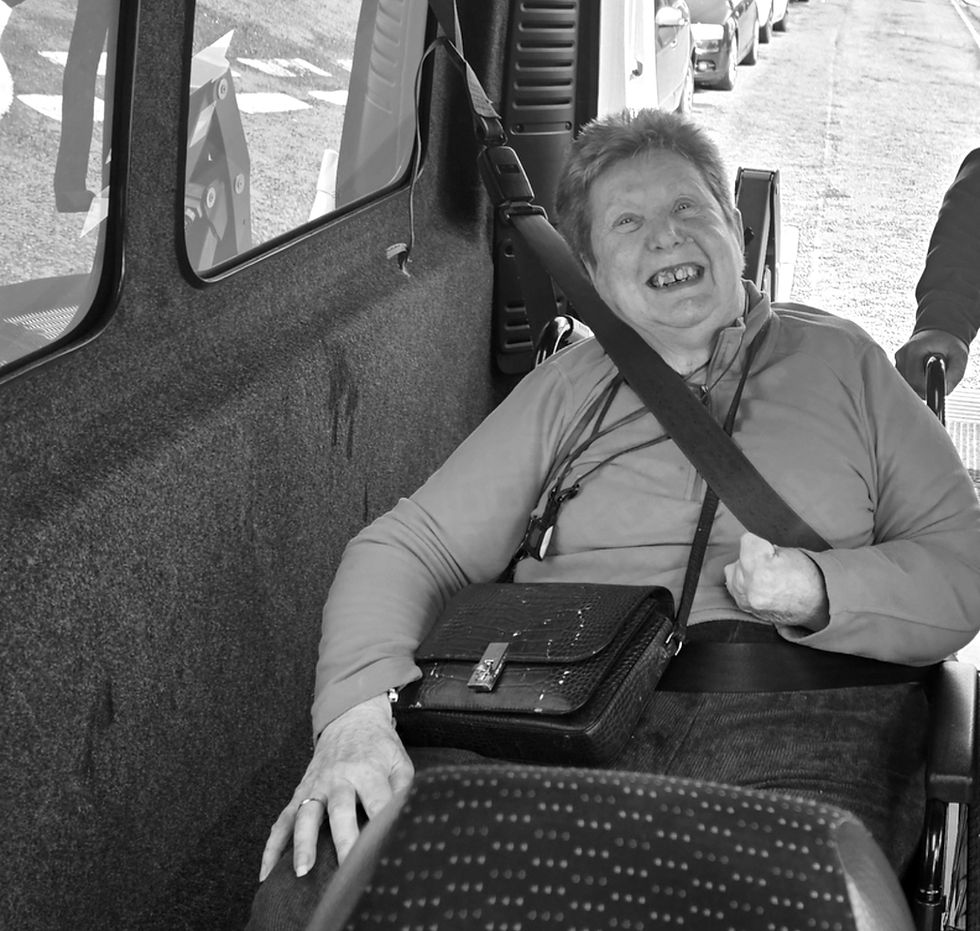
For many people, a trip to the hairdresser may seem simple. For Moira, it is life affirming.
She explains that when she cannot get her hair done, especially during the darker winter months, it can affect her sense of self-respect and wellbeing. Being able to attend these appointments helps her feel more like herself.
“Going to the hairdresser is it,” Moira says. “When your hair is untended, the loss of self-respect is enormous. These trips are life affirming.”
Moira also explained the practical barriers she faces when travelling. Although she has a powered wheelchair, it is not always suitable for every journey. For example, when visiting the hairdresser, she needs to use a push wheelchair so the chair can be reclined when her hair is washed. A ramp is placed outside for her arrival and a DART driver helps to get her inside.
These are the kinds of everyday details that can make travel extremely difficult without the right support.
That is why DART’s door-to-door service matters so much.
Moira says what she values most about the service is its reliability, friendliness and ease of use. She speaks warmly about the drivers and staff, describing them as “fabulous” and praising their personal skills and character.
For Moira, community transport does not just help her attend organised groups or activities. In fact, she says groups can feel overwhelming. What matters most is that DART gives her choice. It allows her to go shopping, go out for lunch, attend appointments, visit the hairdresser, and travel to places that would otherwise be beyond her reach.
“It sets me free,” she says.
Moira is also clear that people who make decisions about transport need to understand the reality of travelling with a wheelchair. While public transport may appear accessible in theory, the reality can be very different. Advance notice, space requirements, wheelchair restraints, energy levels and uncertainty can make a journey feel overwhelming.
She explains that trying to organise mainstream transport can become so difficult that “the difficulty outweighs the pleasure.”
Moira would like to see community transport able to reach even further, helping more people access the places and services they need.
Her message is simple: accessible, reliable, door-to-door transport changes lives.
For Moira, DART means freedom, dignity and independence. It means being able to leave the house, keep appointments, enjoy small pleasures, and remain connected to the world around her.
In her own words, community transport “makes life worth living.”


Comments